









White body (shiroji) with red markings (hi) across the head and body. The white should be snow-like, clean, and free of blemishes, while the red should be deep, uniform, and sharply defined. Common pattern styles include two-step (nidan), three-step (sandan), and inazuma (lightning-bolt).
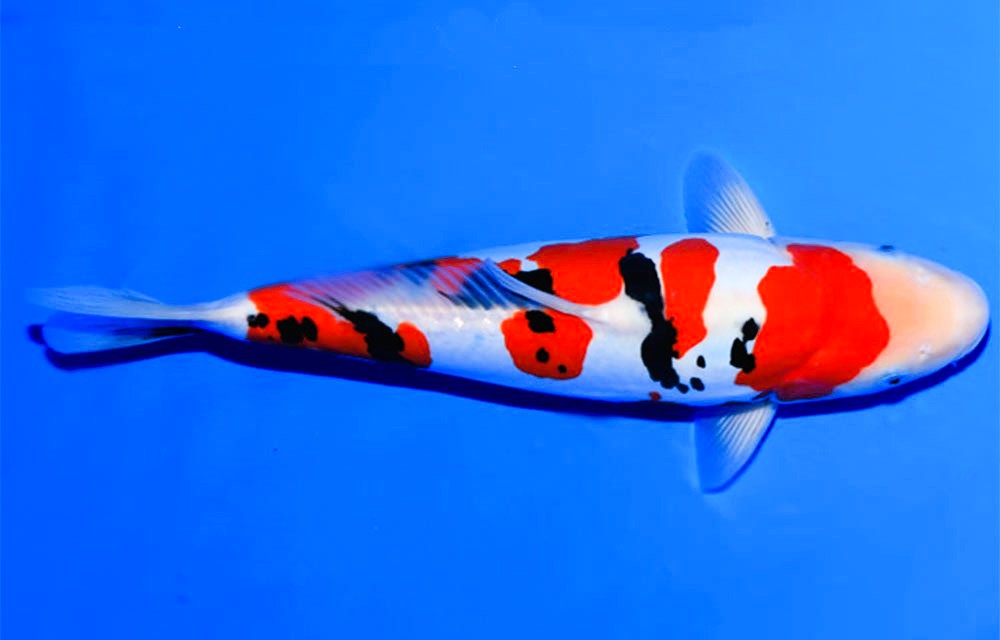
White body with deep red (hi) markings and refined black (sumi) spots. Black never appears on the head, only on the body and fins. Ideal specimens have balanced patterns, crisp edges, and glossy colors. Various subtypes include Maruten Sanke (red crown mark on the head) and Tancho Sanke (single red spot on the head with black markings on the body).
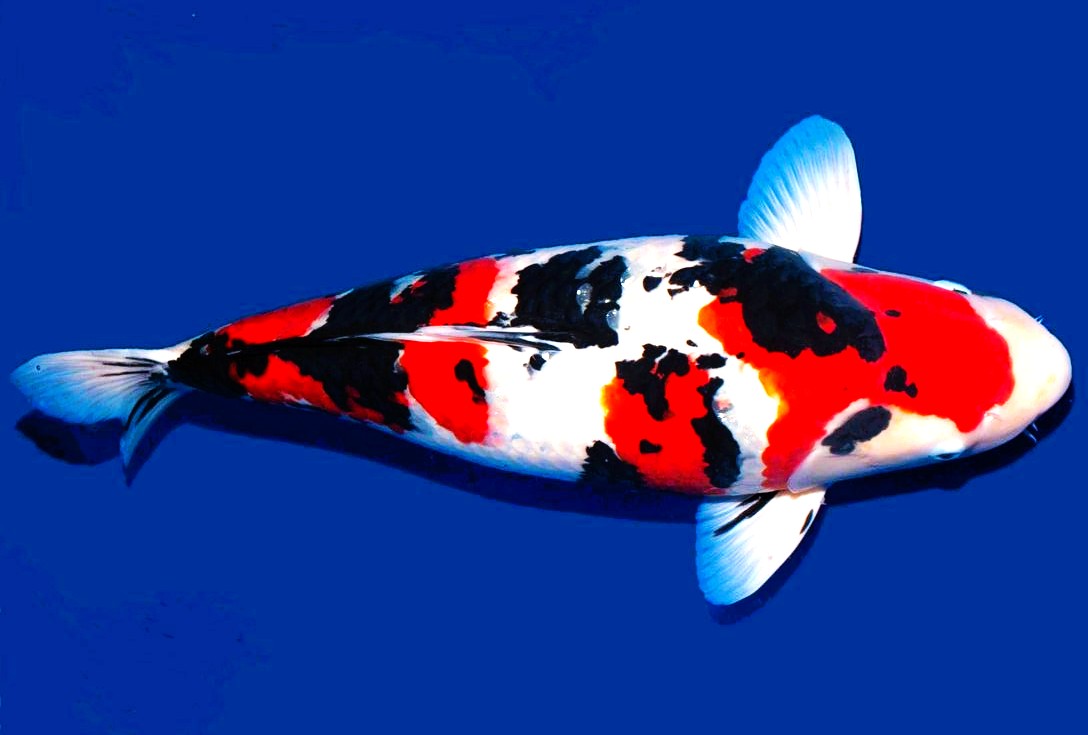
A balanced tri-color pattern of black, red, and white. The black sumi often forms bold bands wrapping around the body, extending onto the head. Hi markings are deep red, while shiroji (white areas) provide sharp contrast. Various subtypes exist, such as Kindai Showa (modern Showa) with more white and cleaner patterns, and Hi Showa with stronger red coverage.
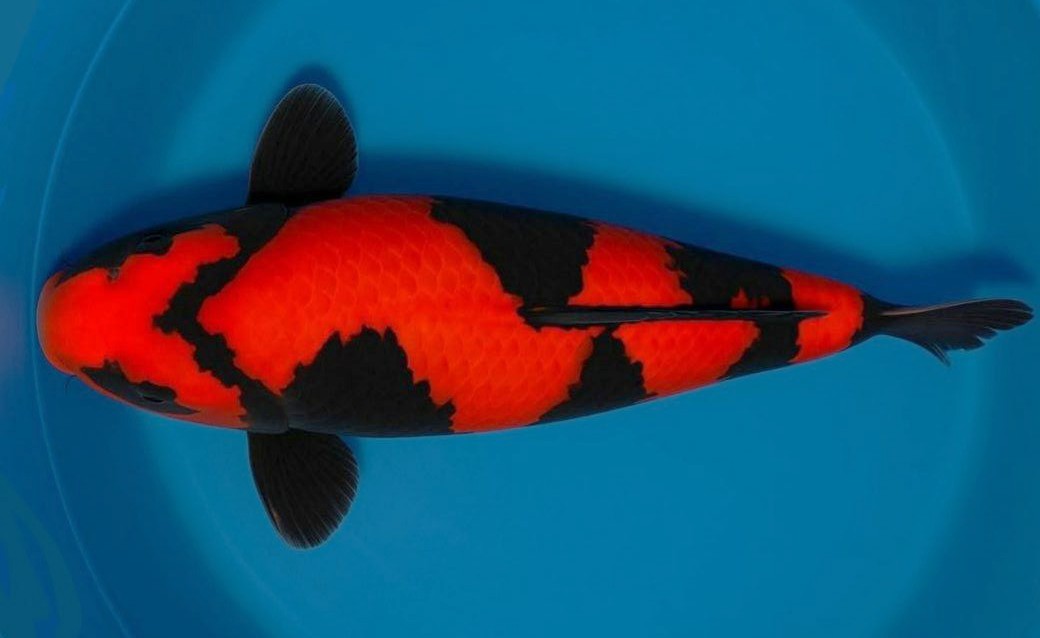
Utsuri koi have a bold black body pattern with a secondary overlay color. Shiro Utsuri features jet-black sumi with snow-white patches; Hi Utsuri displays deep red markings; Ki Utsuri is marked with golden-yellow. Sumi patterns often wrap around the body and extend onto the head, creating balance and symmetry.
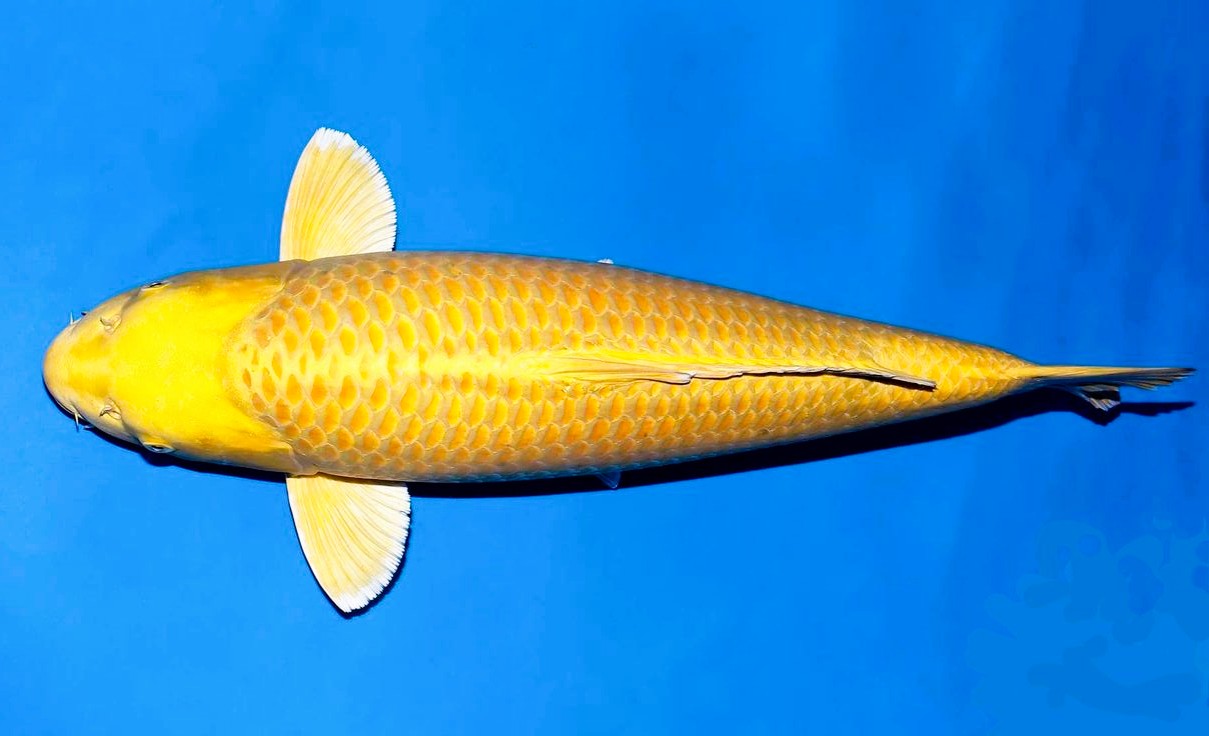
Ogon koi have a metallic sheen across their entire body. Yamabuki Ogon shines in bright gold, Platinum Ogon glows in pure metallic white, and Orange Ogon displays a rich coppery-orange hue. Their fins and body are uniform in color, highlighting their elegant simplicity.

A scaleless koi with blue-gray skin, a bold row of large scales along the dorsal line, and vivid red or orange coloration along the flanks, belly, and head. Some may have a lighter blue or pale white base, enhancing contrast with the red markings.
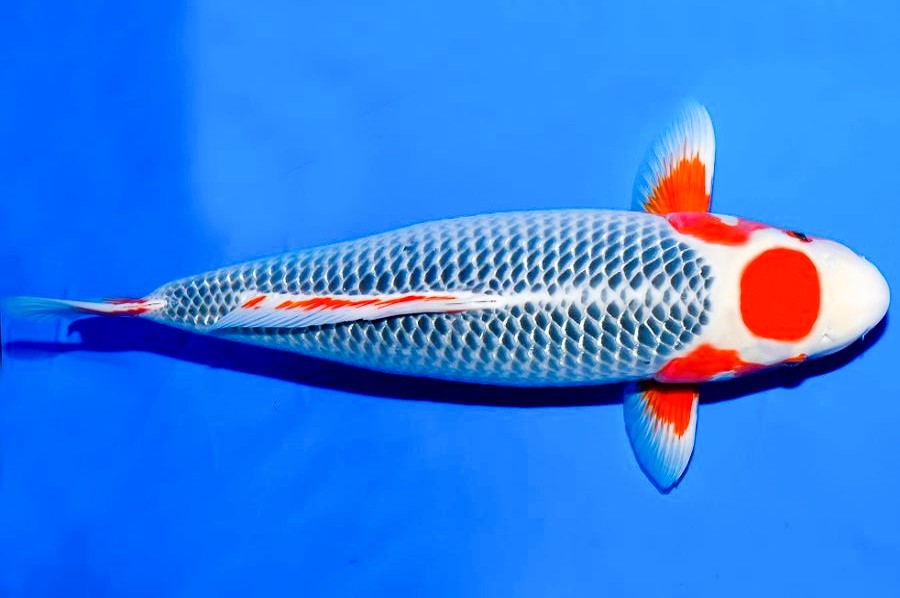
Blue-gray reticulated scales across the back, with symmetrical red-orange (hi) markings on the lower body, belly, cheeks, and fins. The head is ideally clean and pale, with minimal blemishes.
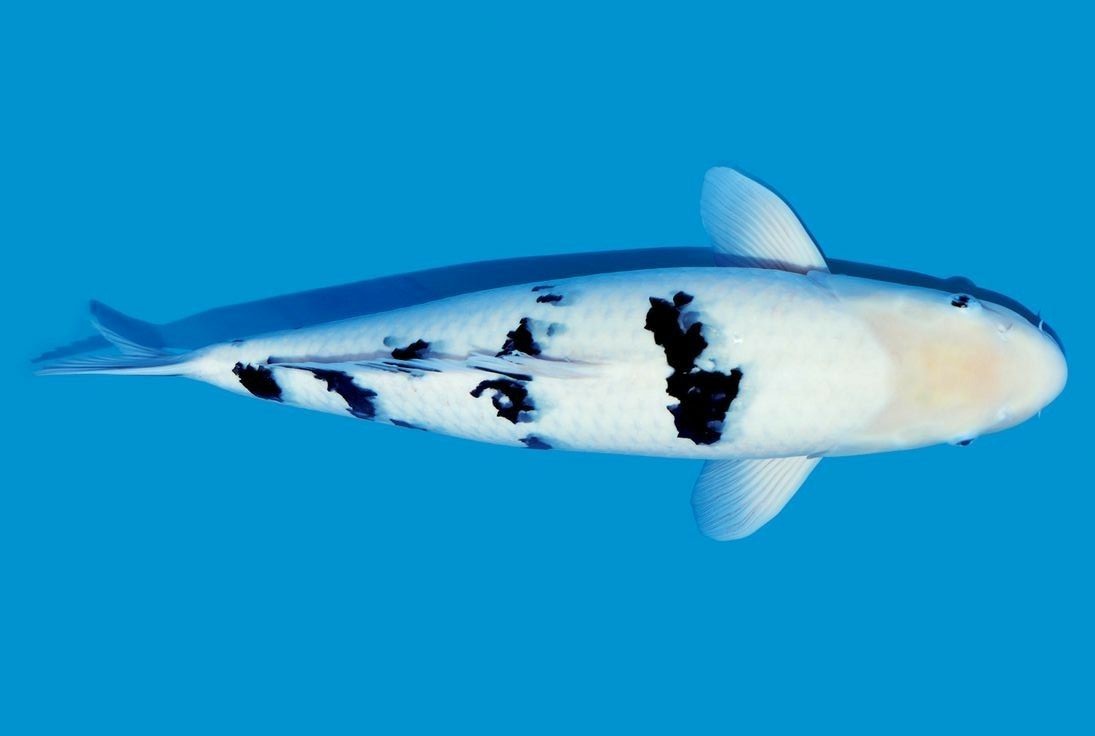
Solid white, red, or yellow base with distinct black markings scattered across the body. The head should ideally remain free of sumi for balance. Bekko koi do not display complex patterns, but rather clean, bold contrast.
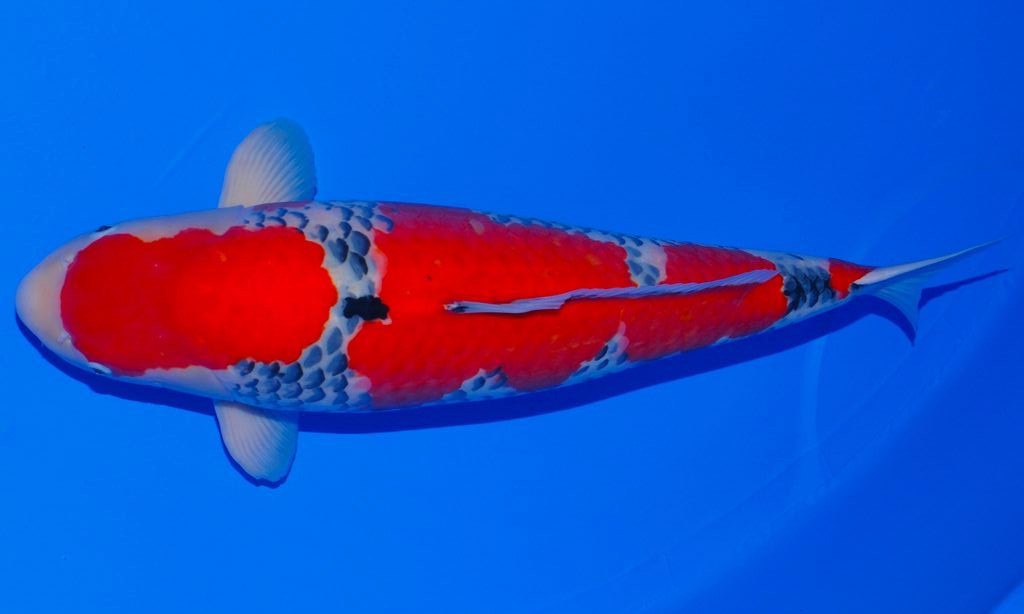
A dramatic koi variety displaying a white or pale base covered with blue/indigo reticulations, red patches (hi), and black highlights, creating a five-color effect. Their colors intensify in colder weather, and high-quality specimens have vibrant, well-balanced markings with no blemishes on the head.
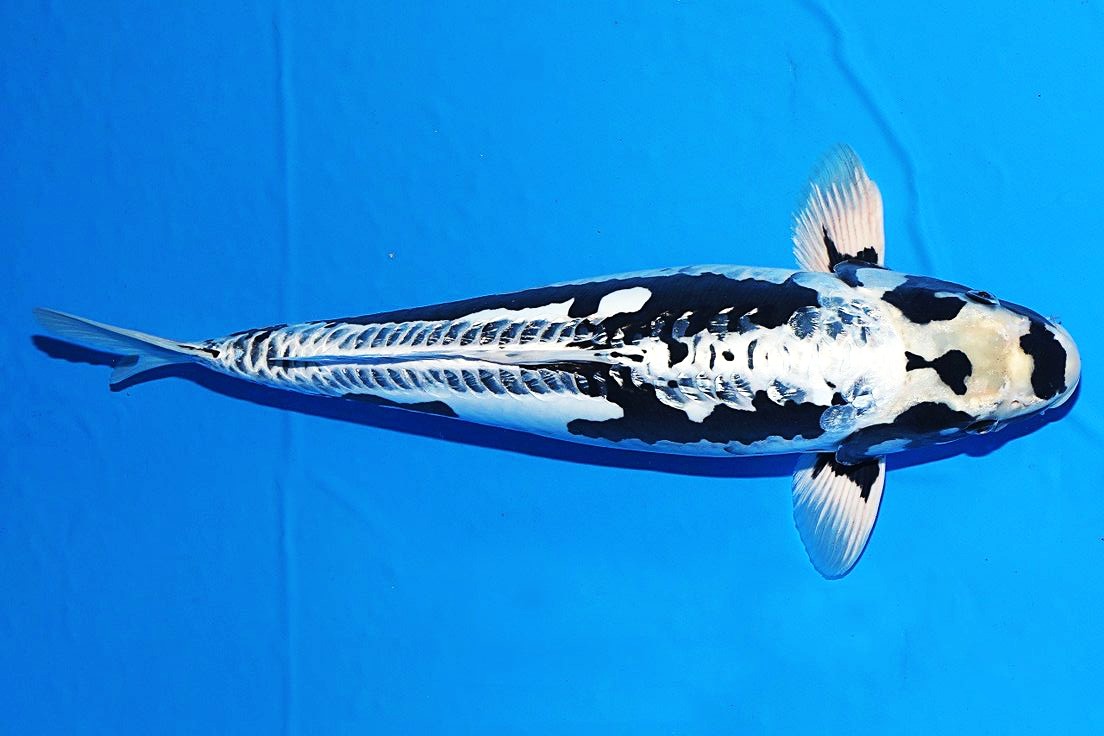
A platinum-white metallic body with bold black markings across the head and body. The reflective skin gives them a glowing appearance. Some Kikokuryu may feature red or orange accents (Beni Kikokuryu). Their scaleless (doitsu) bodies enhance the clarity of their colors.

Solid metallic white body with a glowing platinum sheen. No markings or patterns. Judges evaluate them based on purity of color, brightness, and body conformation. Variants may have scaleless or sparkling features.

Smooth, scaleless body or with a single row of large scales along the dorsal or lateral line. Patterns are sharply defined, and colors are vibrant. The absence of scales highlights the purity and intensity of their coloration.

Solid white body with a single red spot (hi) on the center of the head. No other red markings should appear on the body. The spot should be symmetrical, well-defined, and deep red in color. Body should be sleek with unblemished white skin.