








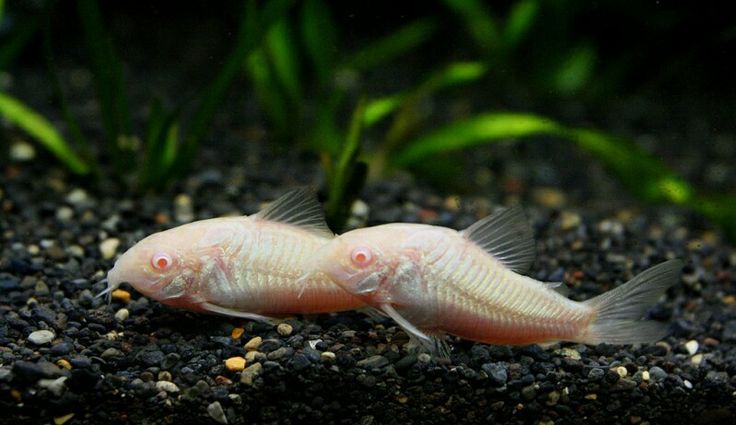
The Albino Cory has a pinkish-white body with a slight golden sheen under good lighting. Its most distinguishing feature is its bright red eyes, a result of albinism. They have the typical Corydoras shape—rounded snout, armored plates, and downward-facing mouth with sensitive barbels.
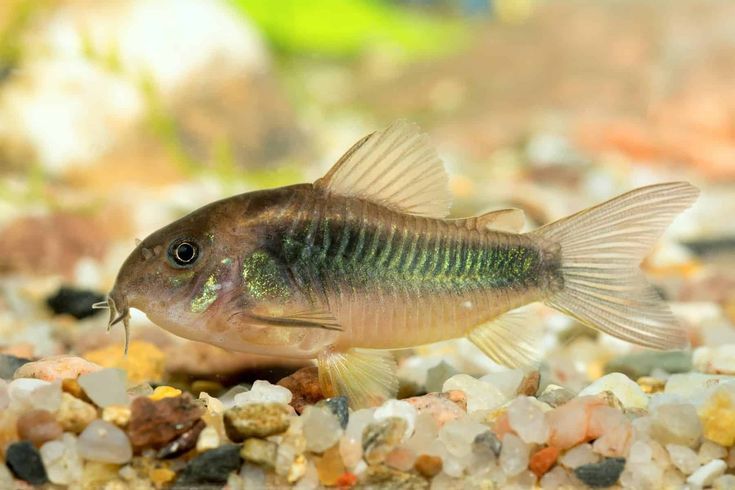
Bronze Cories have a metallic bronze-to-greenish body with a lighter belly. Their eyes are large and expressive, with a short, rounded snout and downward-facing mouth equipped with sensory barbels. Their bodies are covered with bony armor plates, and their fins are generally translucent. They can exhibit slight color variations depending on breeding line, mood, or water conditions.
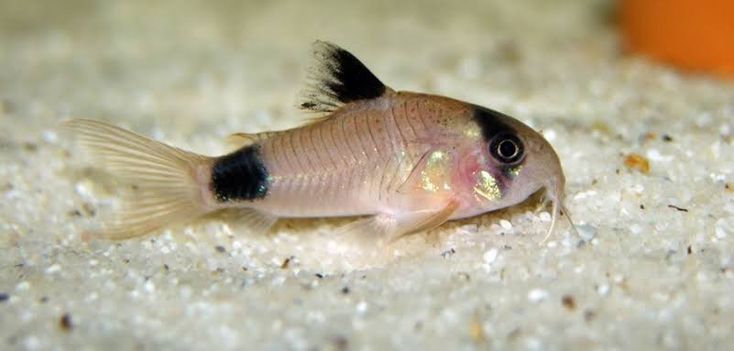
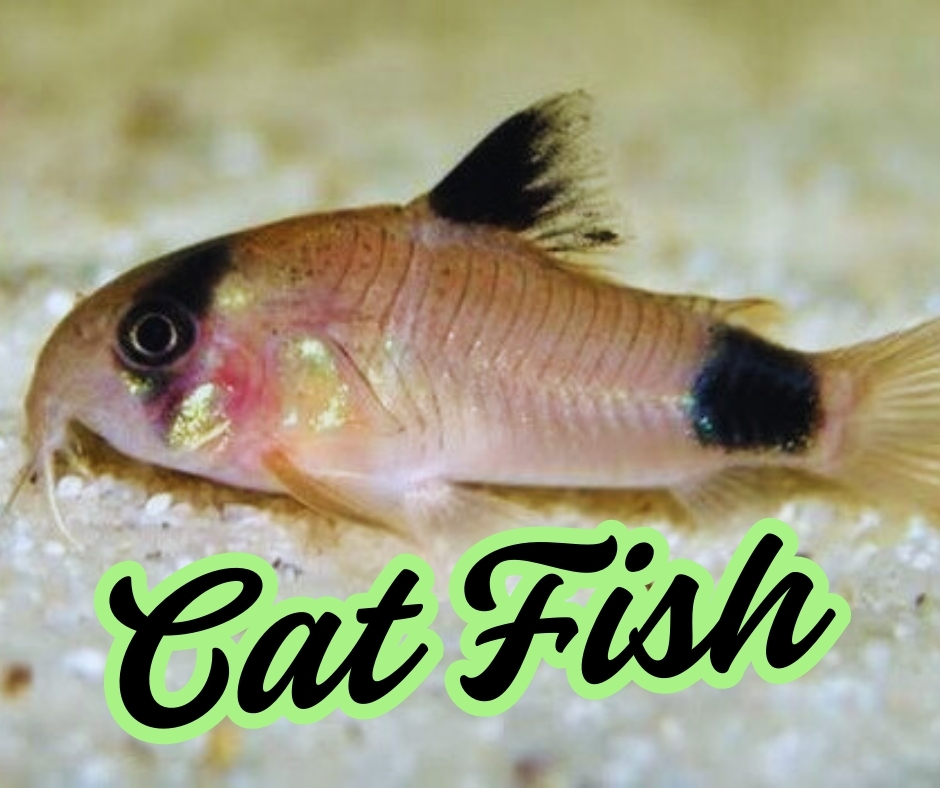
Panda Corydoras are small, stocky catfish with a creamy-beige to pinkish-white body. Their trademark feature is the black patch over each eye, a second patch on the dorsal fin, and a third at the base of the tail, giving them their panda-like appearance. They have armored bodies covered in bony plates, long sensitive barbels, and expressive eyes that make them endearing aquarium fish.
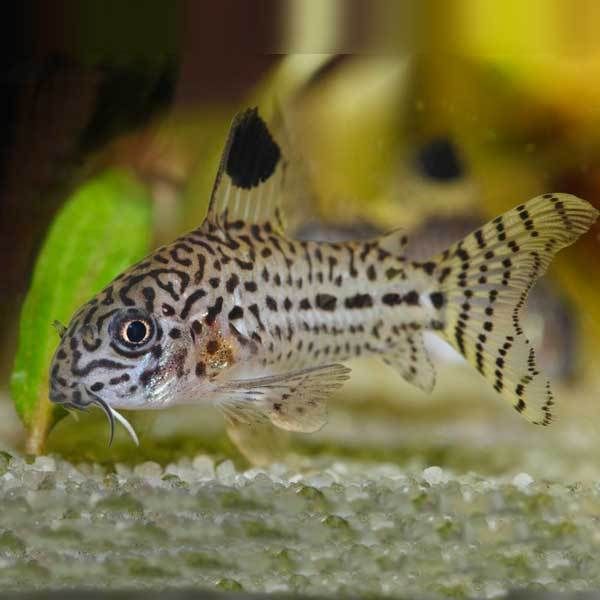
Julii Corys have a light silver-gray body with dark black spots and reticulated markings, especially across the head and flanks. Unlike Corydoras trilineatus, Julii Corys display true spots rather than interconnected squiggly lines. They feature a black blotch at the base of the dorsal fin and another at the base of the caudal fin. Their body is armored with bony plates, and they possess expressive eyes and delicate barbels for substrate foraging.
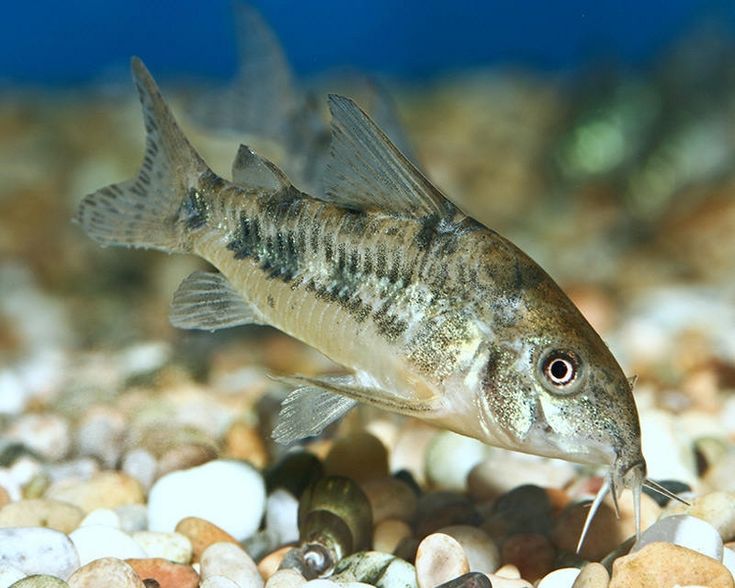
Stocky Corydoras body with pale bronze-silver base overlaid by dark peppery spots and marbling across flanks and fins; translucent fins; expressive eyes; downward mouth with sensitive barbels. Adults reach about 2.5–3 inches.

Dark brown to black body covered in bold, evenly spaced white to bluish-white spots across the body and fins. Pectoral fins are often orange to golden in hue. Adults reach around 2.5–3 inches, with females being larger and rounder-bodied than males.
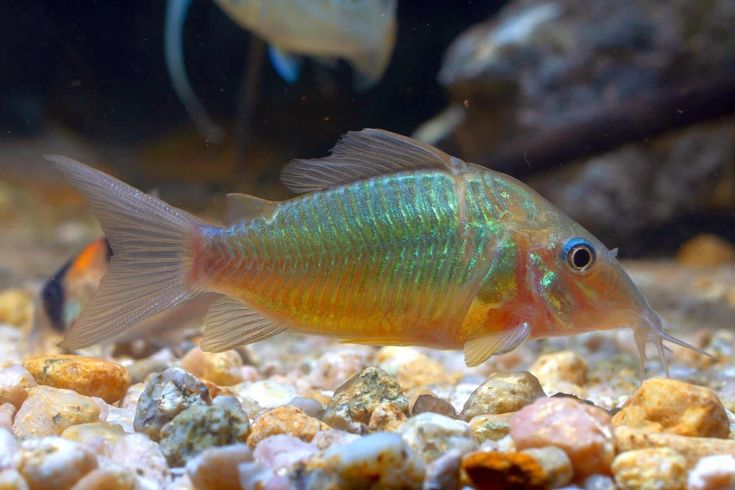
Large, stocky body with shimmering emerald-green to bluish-metallic sheen across the flanks. Belly tends to be lighter, sometimes golden. Fins are mostly transparent with slight green reflections. Females are larger and rounder than males.
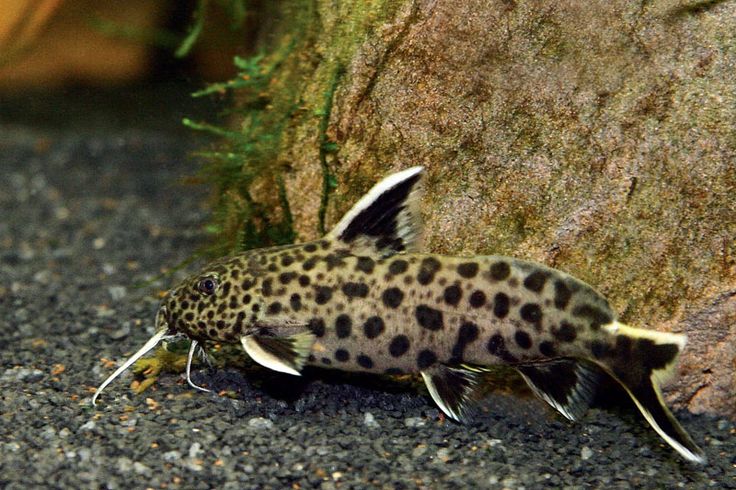
Cream to light brown body covered in dark spots across the body and fins. Black edging on the dorsal and caudal fins. Slender body with large, expressive eyes and elongated whisker-like barbels. Adults reach about 4–5 inches.
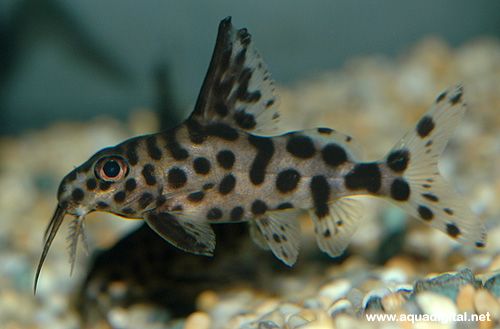
Cream to beige base coloration covered in irregular black spots across the body and fins. Fins may have black edging, especially the dorsal and tail fins. Long barbels and a streamlined catfish body shape. Adults can grow significantly larger than Petricola, reaching 8–10 inches.
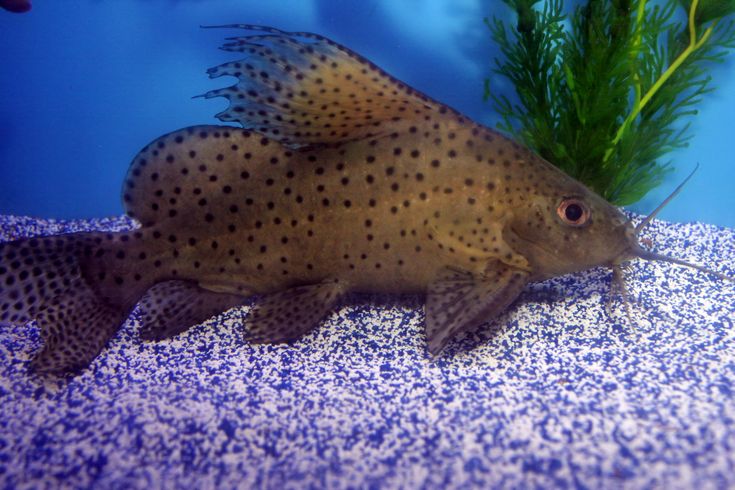
Slender, elongated body with a tall, feathery dorsal fin resembling a sail. The body is covered in dark brown to grayish coloration with irregular black or dark brown spots and stripes. Long barbels extend from the mouth, helping in navigation and food detection. Adults grow up to 8–12 inches in length.
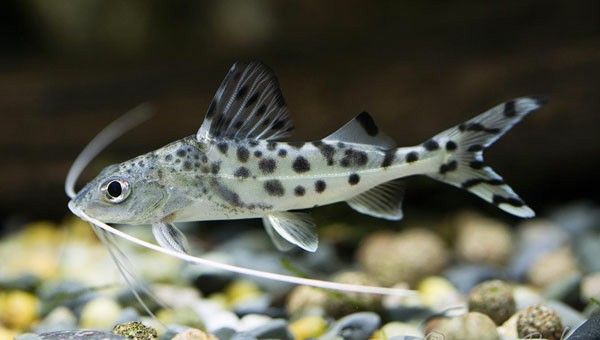
Slender, silver body with distinctive black spots scattered across the body and fins. They have a forked tail and extraordinarily long barbels that can extend past the length of their bodies. Adults grow up to 4–5 inches, though some individuals may reach 6 inches.
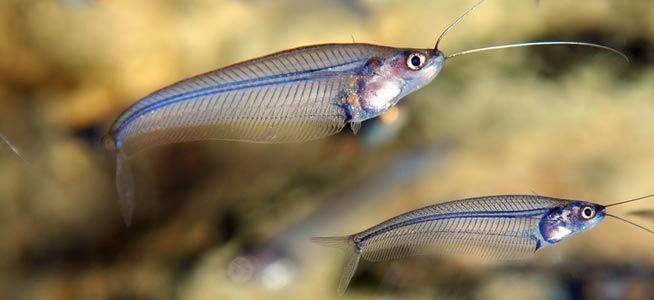
Slender, elongated body that is completely transparent, with a visible backbone and faint silvery sheen. They lack scales and are almost invisible in water except for their internal organs and subtle shimmer. Adults reach about 3–4 inches in length.
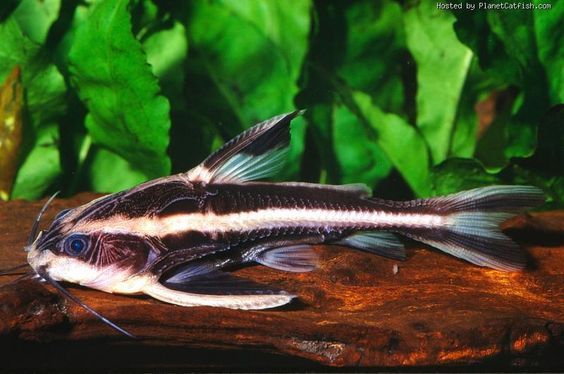
Robust, elongated body with alternating black and white horizontal stripes running from head to tail. The body is covered in tough bony plates, giving it an armored look. Long barbels extend from the mouth for navigation and foraging. Adults can grow between 7–9 inches in length.
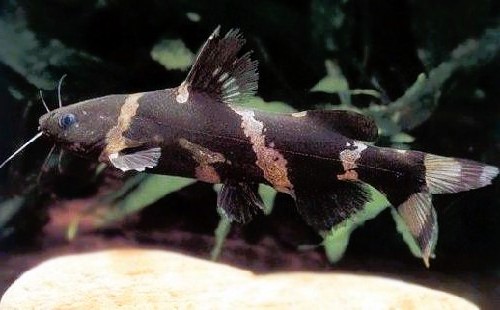
Compact, torpedo-shaped body with alternating black and golden-yellow bands running vertically. The head is broad with three pairs of sensitive barbels for navigation and detecting food. Adults usually reach 3–4 inches in length, making them a good choice for medium-sized aquariums.
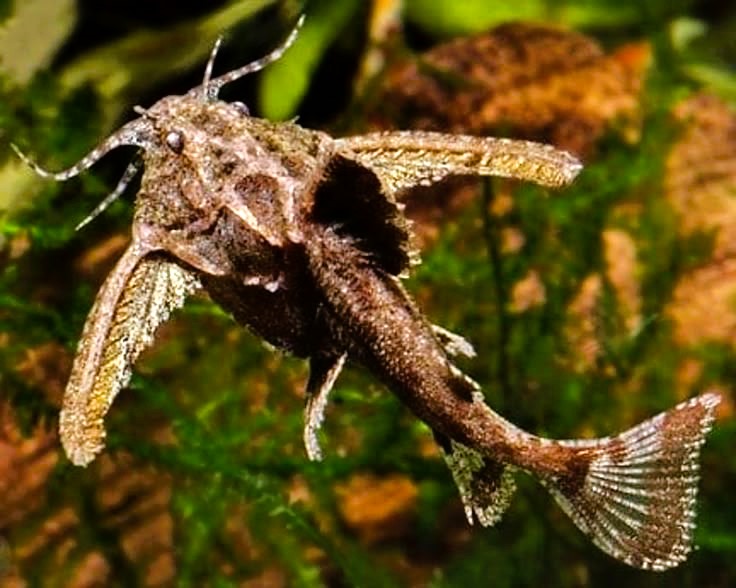
Very small, flattened body with wide pectoral fins that resemble wings. Brownish-gray coloration with mottled or striped markings, providing excellent camouflage. Long barbels for sensing food. Adults reach 1.2–1.5 inches in length, making them one of the smallest aquarium catfish.